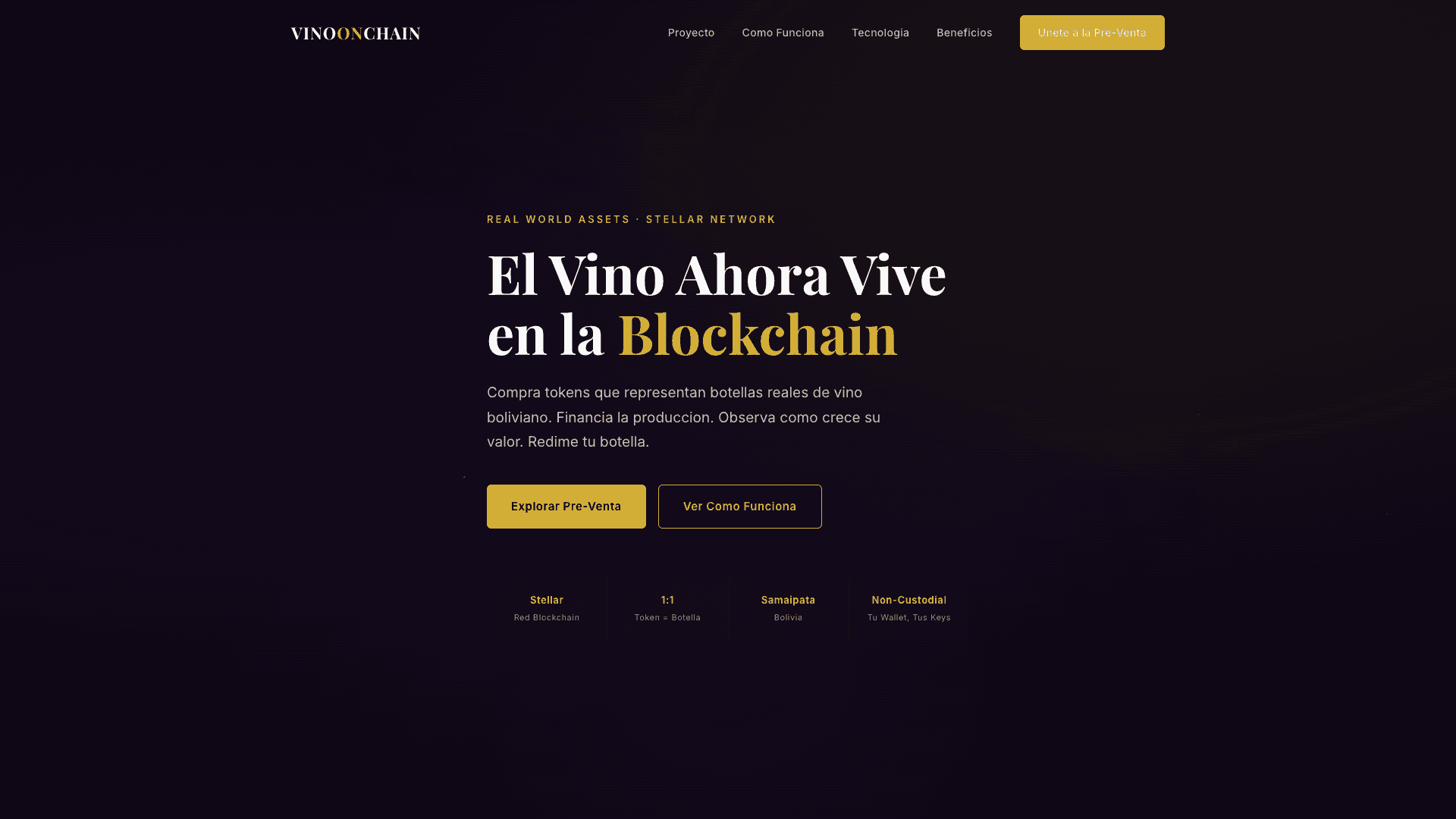
Case Study 2025
Drinks on Chain
Designing and building the frontend for Bolivian wine tokenization on Stellar — from Figma to production.
Overview
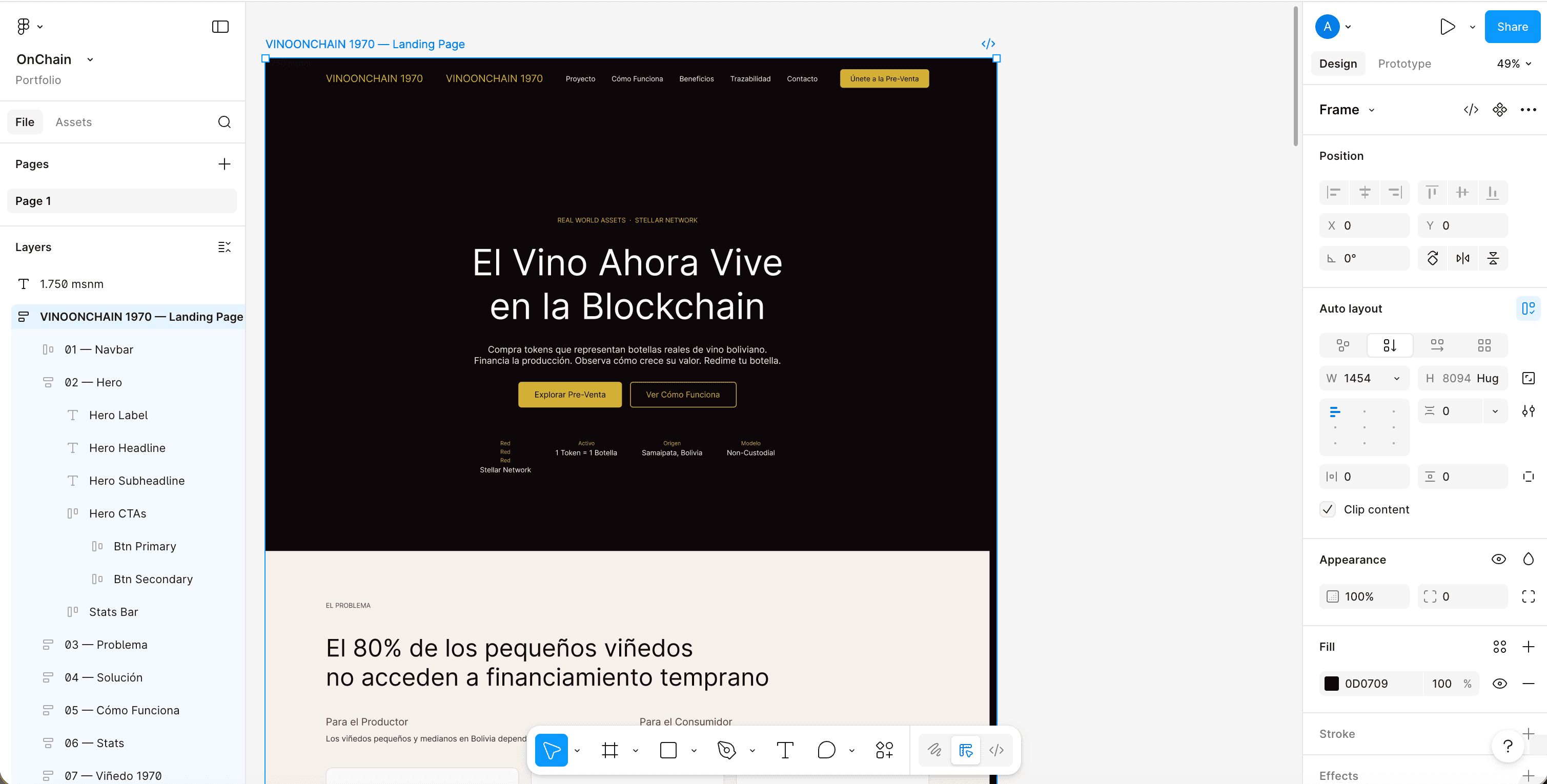
Built the complete frontend experience for a tokenization platform that converts physical wine bottles into digital assets on Stellar blockchain. Owned UI/UX design in Figma and frontend development with Next.js 15 + TypeScript. Each token represents a real bottle from Vinedo 1970 in Bolivia — the interface needed to make blockchain feel trustworthy and simple. Team handled backend and smart contracts; I shipped what users see, click, and trust. Born from the Stellar Bootcamp, now growing as a startup. Live MVP at angel1104.github.io/vinoonchain-landing.
The Problem
Designing and building the frontend for Bolivian wine tokenization on Stellar — from Figma to production.
Bolivian artisanal wine producers face brutal financing gaps — 80% lack access to early capital and depend on intermediaries who add 40% to final prices. Consumers can't verify origin or authenticity. The entire supply chain runs on trust and paperwork, with zero transparency from vineyard to bottle.
Visual proof
Screens and designs that shipped
Design Work
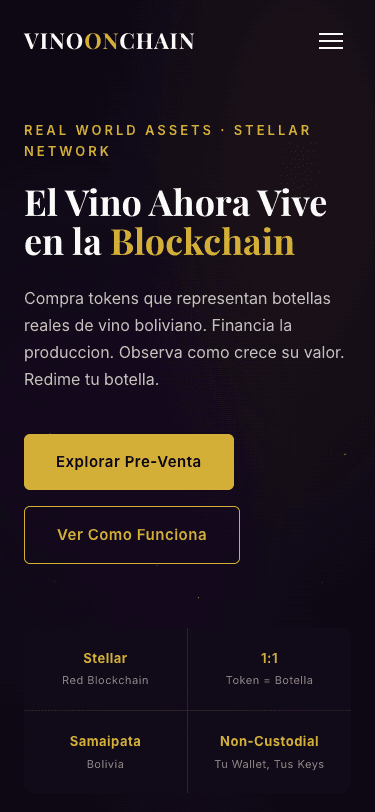
Final Product
angel1104.github.io/vinoonchain-landing
What I learned
- 01 /
Blockchain needs a reason, not a trendTokenization works when it solves a real problem — early financing for producers, transparency for consumers. The tech had to justify itself with utility, not novelty.
- 02 /
Design bridges the crypto gapUsers don't care about 'decentralization' — they care about trust and simplicity. Good UX made blockchain invisible, which made adoption possible.
- 03 /
Bootcamps force shipping, not learningThe Stellar Bootcamp deadline eliminated overthinking. We built an MVP that worked, not a perfect product that never launched. Constraints create momentum.